

DETZO Winders Modernization – advanced reconstruction of control and drive systems
DETZO winders, especially in their four-spindle configuration, are technologically advanced stations for the production of left- and right-handed layered coils. Despite their robust mechanical design, their control architecture, drive systems, and safety features often fail to meet modern requirements for precision, integration, and reliability.
Professional modernization of winders and other devices allows them to be transformed into fully functional, digitally controlled production systems – without the need to invest in new machines.
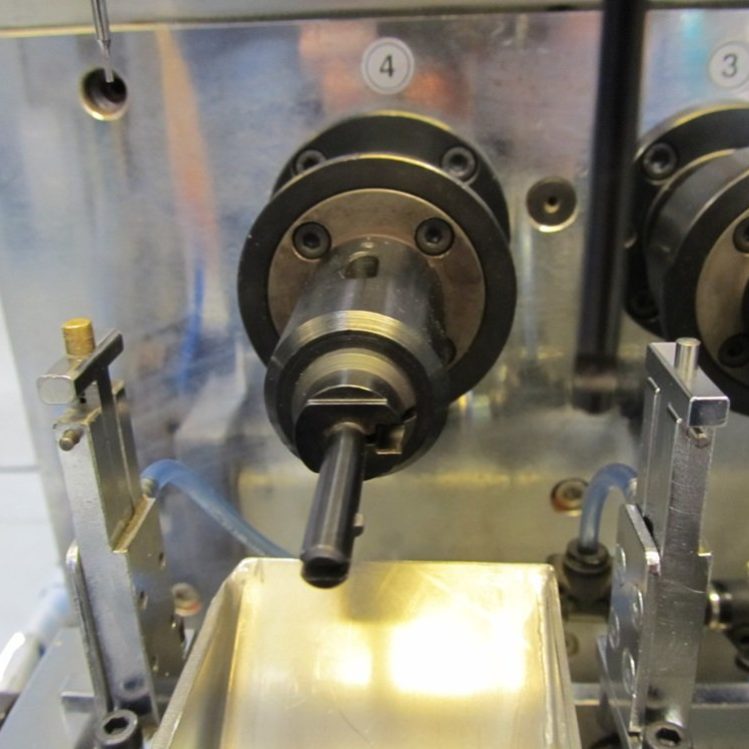
DETZO winders operate in an automatic cycle on multiple spindles (typically 4), implementing complex motion paths along the following axes:
● X (left-right),
● Y (forward-backward),
● Z (up-down),
● Q (spindle/beam rotation).
The mechanical system is based on belt drives for individual axes and spindles, which results in:
● limited dynamic stiffness,
● susceptibility to wear and decalibration,
● necessitating periodic adjustments and replacement of transmission components.
Additionally, the machine utilizes:
● pneumatic carcass clamping and spindle locking systems,
● mechanical spindle indexing every 30°,
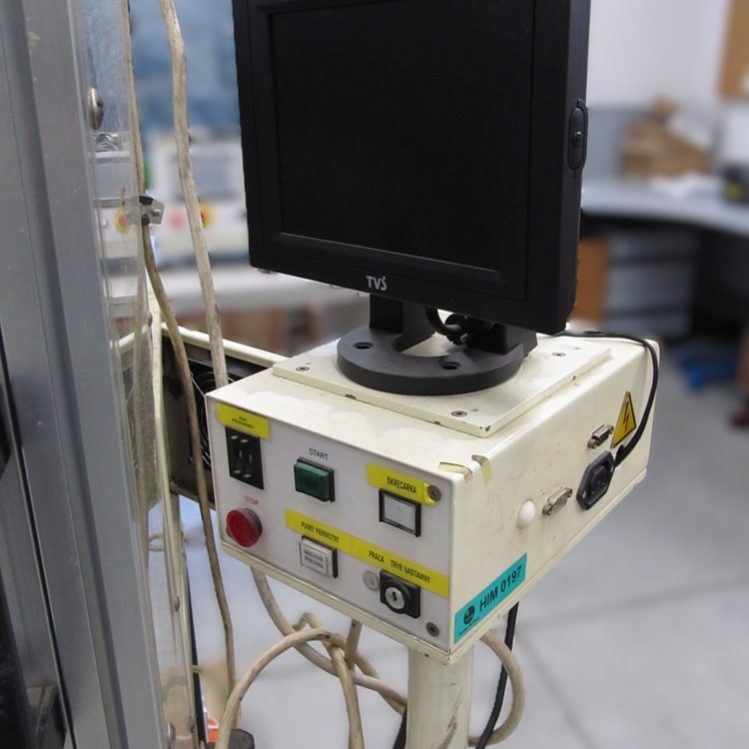
● a distributed control system based on an industrial computer and I/O modules.
These areas constitute the main scope of potential modernization.
After modernization, the DETZO winder achieves parameters comparable to new machines:
Precision:
● Axis positioning accuracy of tenths of a millimeter,
● Precise spindle angle control (below 1°).
Efficiency:
● Shorter cycle times,
● Continuous operation with minimal downtime.
Repeatability:
● Full reproducibility of winding programs,
● Elimination of the impact of mechanical wear on product quality.
Diagnostics and Service:
● Quick error identification,
● Remote access and service support,
● Monitoring of process parameters.
In the case of DETZO winders, it is particularly important that:
● the mechanical structure (frame, guides, handles) is durable,
● the main limitations result from outdated automation,
● retrofit allows for the preservation of existing infrastructure.
Modernization enables:
● reduction of investment costs by up to 50–70%,
● shortened implementation time,
● customization of functionality precisely to the customer's process.
By choosing machine modernization at NEOTECH, customers receive not only a technical upgrade but also a comprehensive engineering approach based on years of experience in industrial automation and winding system construction.
Each project is individually implemented – from a detailed technical audit, through drive and control system design, to implementation and optimization of the production process. This allows modernized machines to achieve parameters comparable to new equipment, while maintaining existing infrastructure and significantly lowering investment costs.
NEOTECH also provides full after-sales support, software development, and the possibility of further system expansion in the future, making modernization a safe and scalable investment.
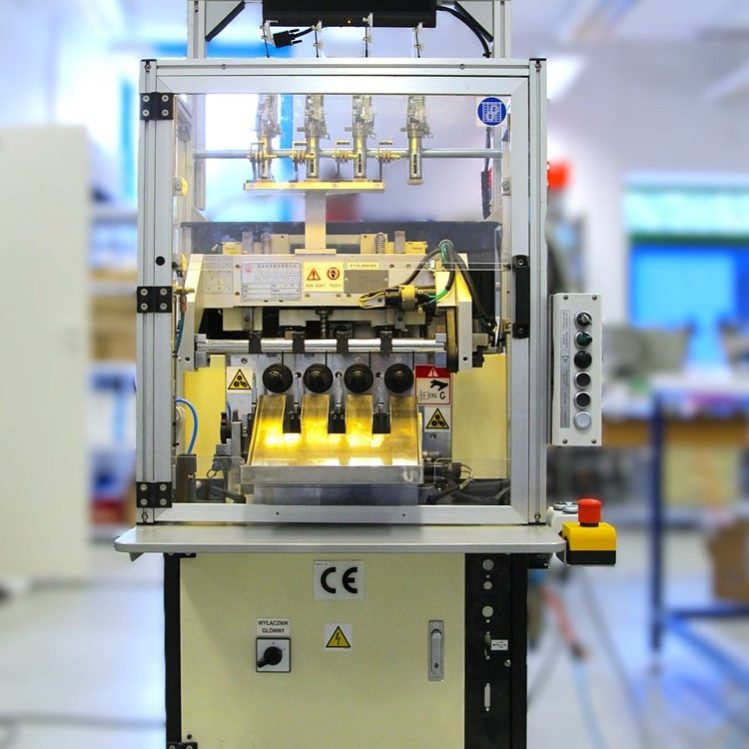
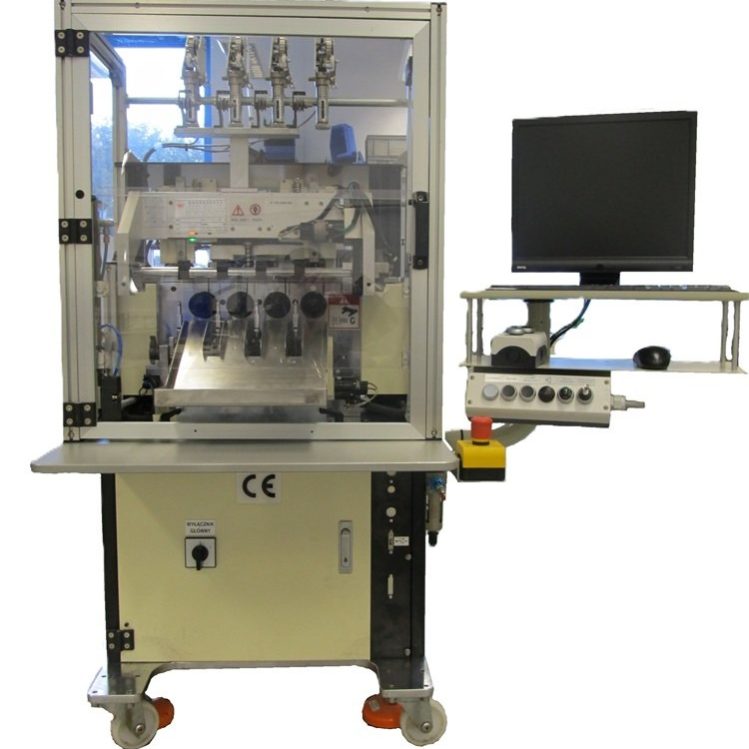
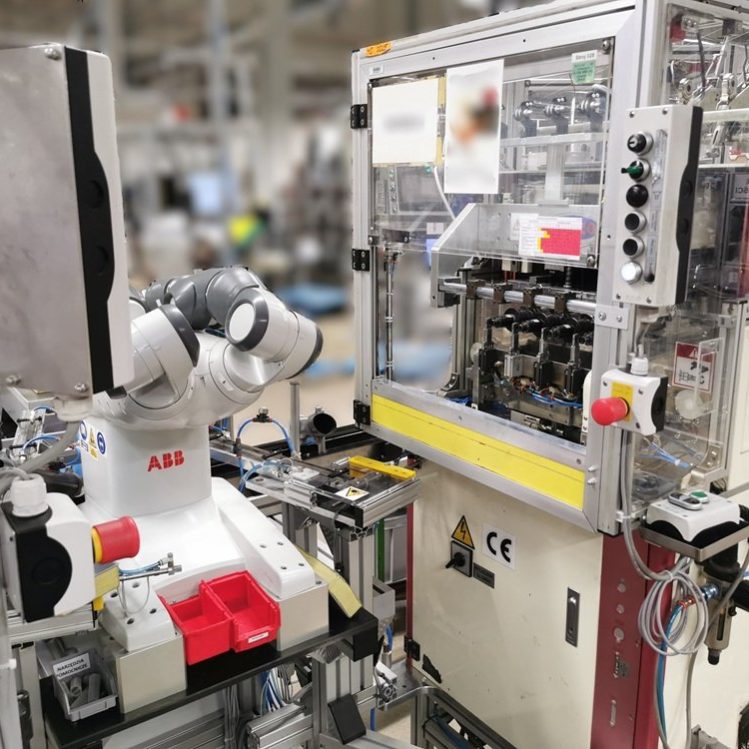
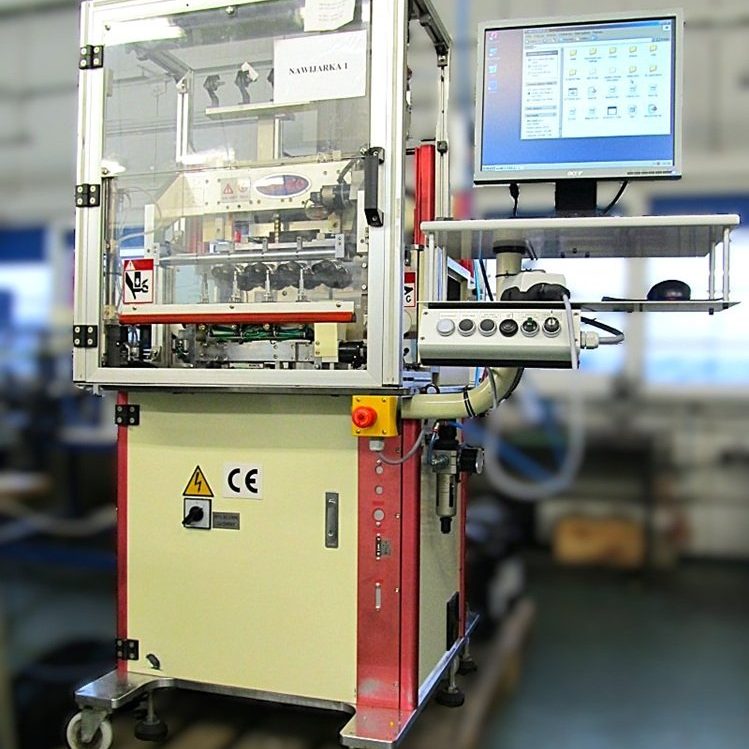
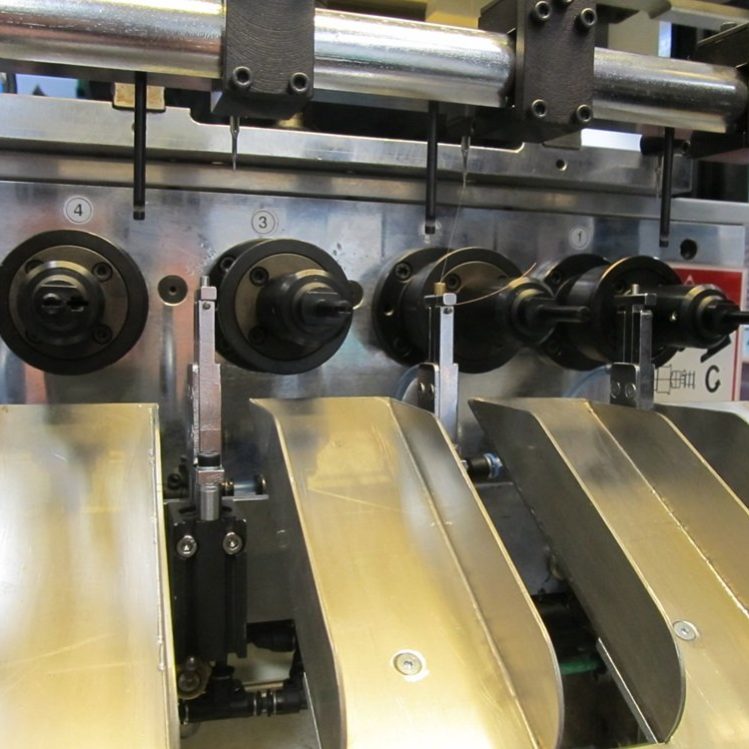
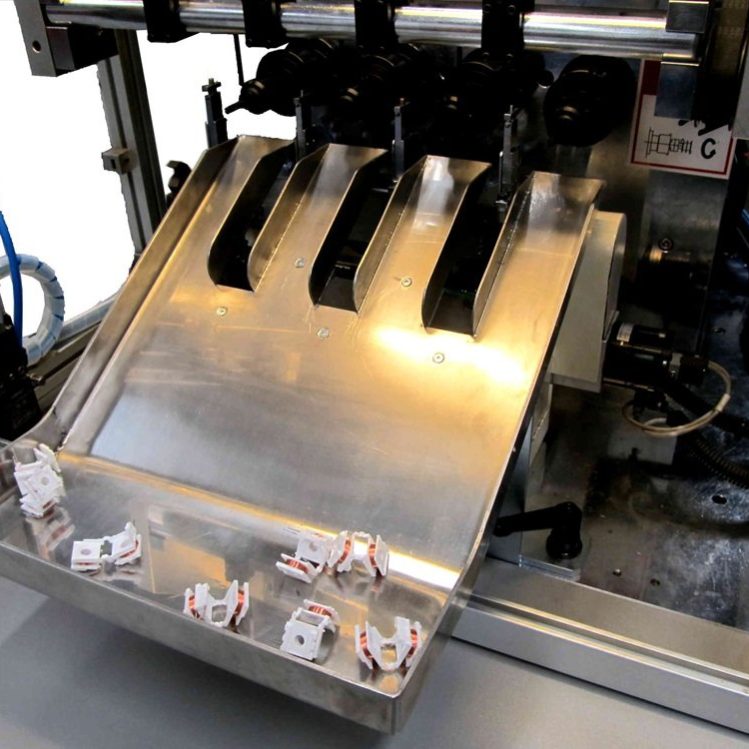
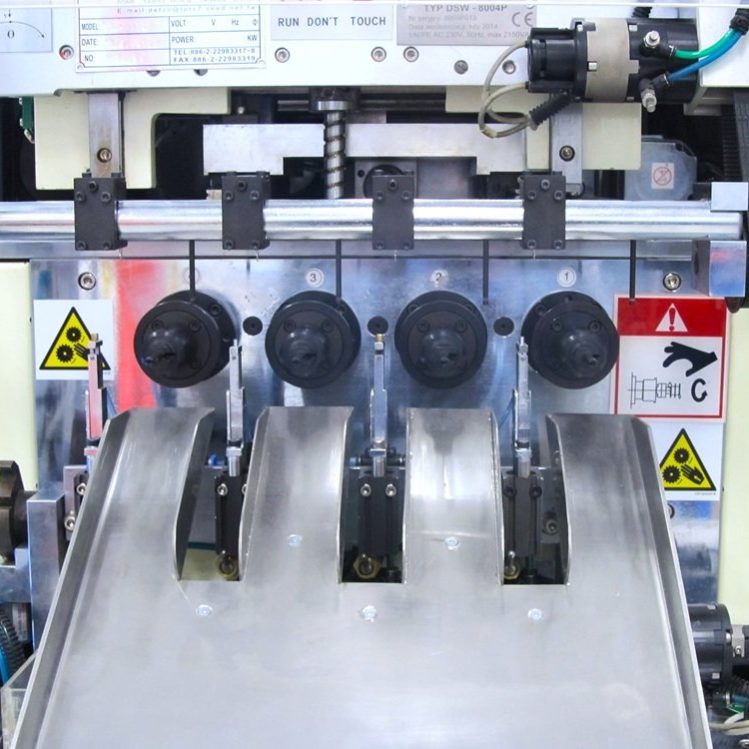
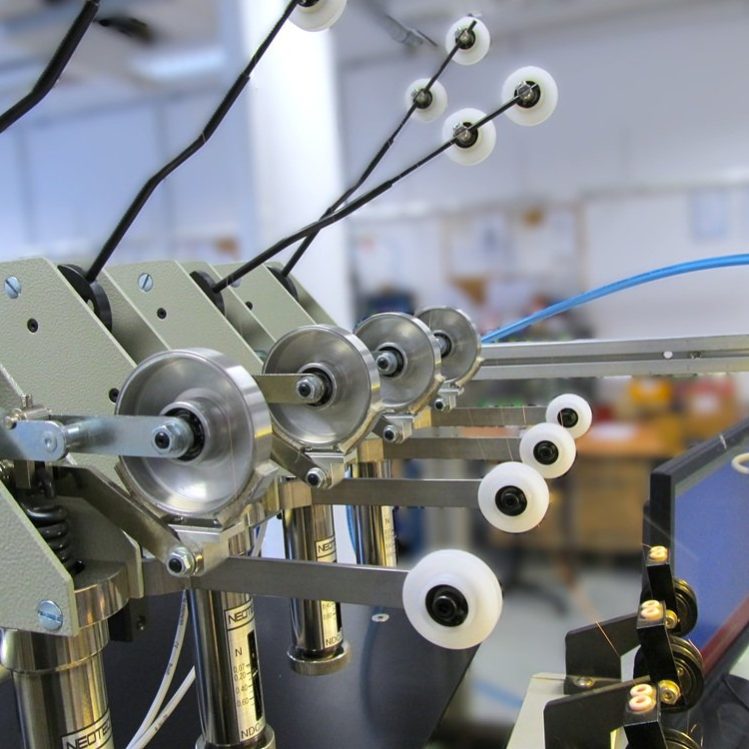
Winder modernization - a full-scope system approach
A key modernization step is the transition from classic belt drives and asynchronous motors to servo drive systems:
● Implementation of servo motors for the X/Y/Z/Q axes,
● Use of absolute or incremental encoders,
● Elimination of backlash through digital backlash compensation,
● Synchronization of multi-axis movements (interpolation).
Results:
● Significant increase in positioning accuracy,
● Ability to implement complex winding trajectories (e.g., variable pitches),
● Process stabilization at high speeds.
In the original configuration, the spindle drive is provided by toothed belts (e.g., 800 5M), which limits:
● dynamic speed changes,
● angular positioning accuracy,
● process repeatability.
The modernization includes:
● use of independent servo drives for each spindle,
● implementation of electronic synchronization (electronic gearing),
● real-time torque and wire tension control.
The original system, based on an industrial computer and dedicated software, can be replaced with:
● an industrial-grade PLC controller,
● an HMI system with process visualization,
● a distributed architecture (EtherCAT / Profinet),
● process parameterization via recipes.
New capabilities:
● winding program management,
● online diagnostics (I/O, axis positions, errors),
● integration with MES/ERP systems.
The initial solution included features such as:
● an I/O diagnostic panel,
● motor position monitoring,
● user and service programs.
In modernization, they are significantly expanded and standardized.
DETZO winders are equipped with, among other things:
● EMERGENCY STOP to cut off the power supply,
● mechanical spindle locks,
● work area guards.
The modernization includes:
● implementation of safety systems (PL d / SIL 2),
● use of safety relays and safety PLC controllers,
● door/guard monitoring (interlock),
● safe drive stopping (STO, SS1).
An important element is the optimization of:
● spindle lock actuators,
● body clamping systems,
● working pressure control (typically 0.6–0.65 MPa).
Possible improvements:
● position and pressure sensors,
● automatic clamping accuracy check,
● synchronization of pneumatics with the CNC cycle.
The modernization of DETZO winders is an advanced engineering process involving the full integration of new control, drive and safety systems with the existing machine mechanics.
Thanks to the use of modern technologies – from servo drives, through PLC systems, to digital diagnostics – it is possible to achieve high precision, repeatability and reliability of the winding process.
This solution is especially recommended for production plants that want to increase their competitiveness without having to replace their entire machinery.
