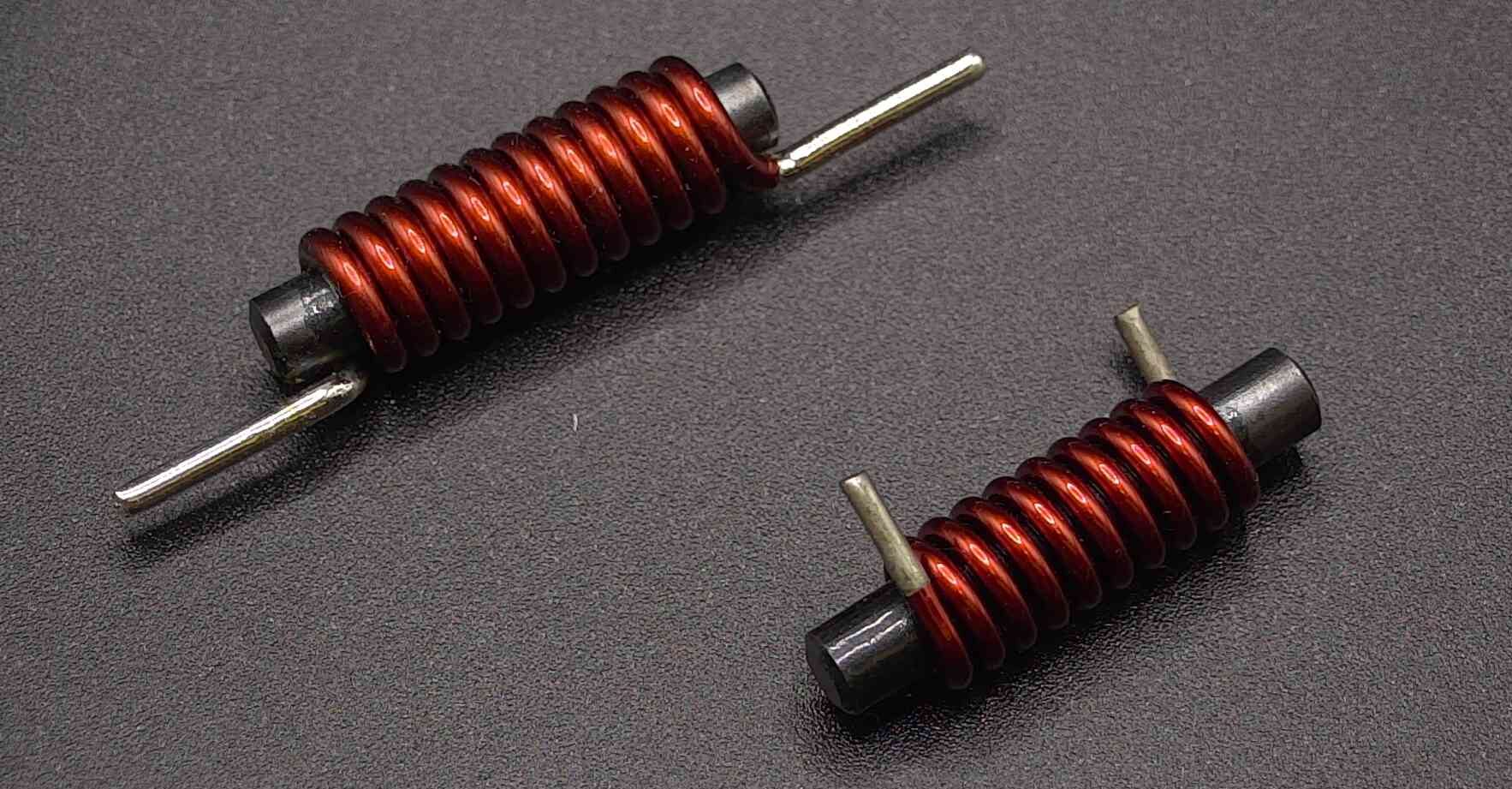
Are you looking for reliable inductive components for your projects? The production of inductive components is our specialty. Chokes on cylindrical ferrite cores meet the highest requirements set by our customers.
In this article, we focus on single-layer cylindrical chokes. If you want to learn the secrets of designing such inductors, go to the previous article!
Ferrite core chokes - what's all the fuss about?
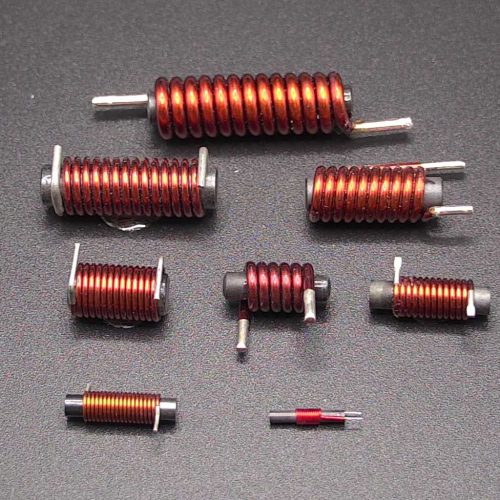
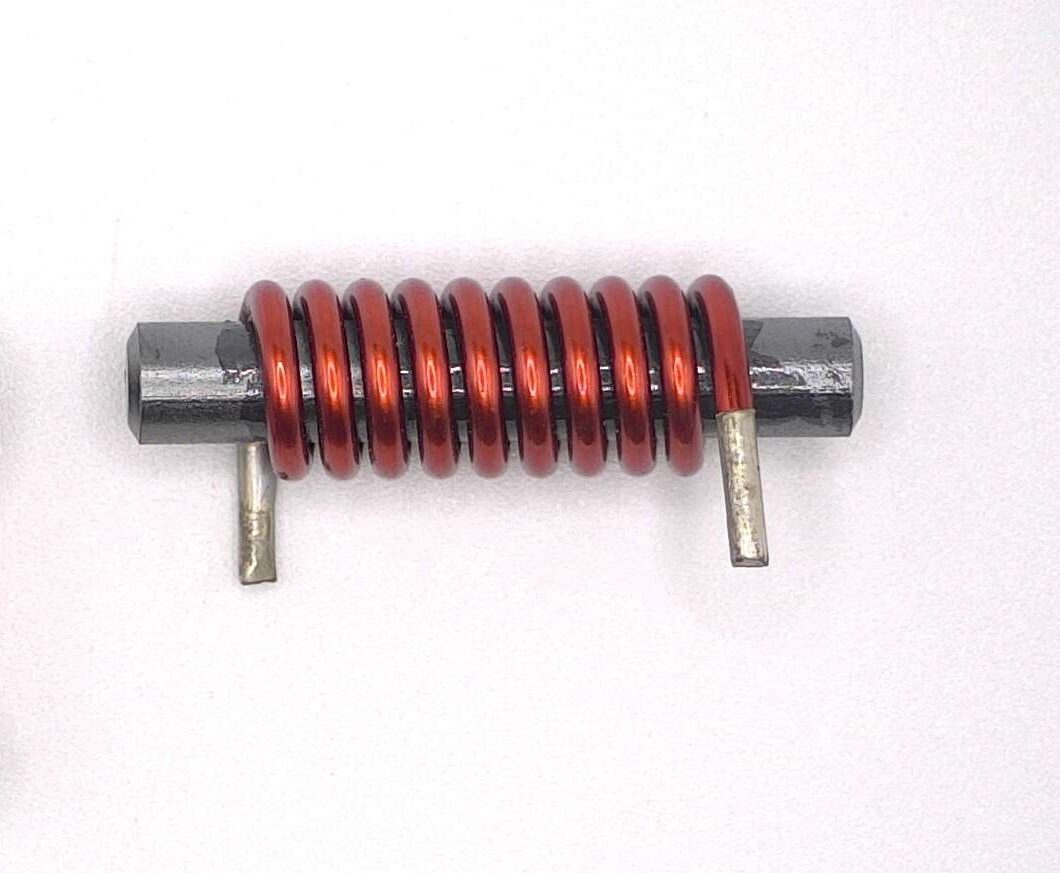
Cylindrical chokes are passive inductive elements that consist of a cylindrical ferrite core on which a winding made of copper wire is wound.
Cylindrical chokes manufactured in NEOTECH are characterized by a compact design and high winding precision. These products are ideal for applications requiring high power density. Chokes on cylindrical cores are used in converters, power supplies and industrial devices.
Ferrite plays a key role here – it is a ceramic material with magnetic properties (it consists mainly of iron oxides and other metals such as nickel, manganese, zinc or cobalt), which allows the magnetic field to be concentrated in the core. This material is widely used in electronics due to its unique properties, which make it ideal for controlling and directing the flow of the magnetic field. This makes it possible to easily increase the inductance of the choke.
Check out the offer of ferrite materials from our partner, Neosid!
It is worth mentioning here the basic limitations of ferrite resulting from the physics of the material:
⚠ Curie temperature (also called Curie point) – the temperature above which ferrite loses its magnetic properties. This means that the core, which was previously able to maintain its own magnetization, loses this ability because its magnetic moments become chaotic under the influence of heat. Depending on the ferrite material used, the Curie temperature can range from 150 to 600 °C. For comparison, the Curie temperature of pure iron is about 770 °C and that of pure cobalt is about 1,115 °C.
- The Curie temperature limits the use of specific ferrite materials to specific applications – operating an inductive element above the Curie temperature results in a rapid loss of inductance.
⚠ Ferrite cutoff frequency – this is the maximum operating frequency at which ferrite can effectively perform its function as a magnetic material in inductive devices. Ferrite is used in electronics due to its ability to concentrate the magnetic field and suppress electromagnetic interference (EMI). However, the use of this material at higher frequencies is limited by two main phenomena: dielectric losses (losses due to eddy currents and heating of the material) and deterioration of magnetic permeability (the magnetic permeability of ferrite decreases with increasing frequency, which limits its ability to effectively store magnetic energy).
- Exceeding the cutoff frequency value leads to loss of magnetic properties, a decrease in inductance, and increased losses, which can reduce the efficiency and reliability of devices.
⚠ Hysteresis – the phenomenon of delaying magnetic flux density (B) with respect to the changing magnetic field strength (H). The area enclosed in the hysteresis loop in the B-H diagram represents hysteresis losses, which are caused by the energy required to rearrange the magnetic domains in the material. In other words, in the application of ferrites as cores of inductive elements, hysteresis is seen as a problem because its surface area is proportional to the energy loss during one remagnetization cycle. Different ferrite materials have different hysteresis loop widths.
- Because hysteresis losses limit the ability of the material to work effectively at higher frequencies, the ferrite cutoff frequency is related to hysteresis (however, other factors, such as dielectric losses and eddy currents, also affect the cutoff frequency to a large extent). Understanding the relationship between these phenomena allows for the optimal selection of the ferrite material for a specific application.
🔧 Flexible production capabilities
For over 25 years, we have been manufacturing advanced inductive components, including ferrite core chokes for applications in various industries, including automotive, aerospace, medical, industrial, consumer, defense, and dual-use.
Features of our production include:
Personalization: We manufacture chokes with various inductance values and dimensions, tailored to the customer’s needs and specifications. We also work with the customer to develop optimal solutions and unique technologies.
Precision: We have a modern machine park and have mastered advanced technologies and production methods, thanks to which we guarantee high repeatability of parameters and quality of workmanship.
High efficiency: Our production capabilities allow us to fulfill both small and large orders. We have prototyping capabilities to make products from single pieces.
Top quality materials: Each material undergoes initial inspection to minimize the risk of defects and errors at the initial stages.
🔧 Production technology
Our production methods for cylindrical core chokes combine modern technologies with laboratory precision.
0️⃣ Preliminary arrangements – Before production begins, details must be established. At this stage, the customer communicates their needs and requirements, provides samples of materials or target products, and we present our capabilities and ensure compliance with mechanical dimensions and electrical parameters. If there is a need to make corrections to the project, now is the best time to do so. If the customer has such a need, we also sign an NDA at this stage.
1️⃣ Material selection – We only use materials approved by the customer to ensure that even the most stringent requirements are met. In accordance with the arrangements from the previous stage, we can now deliver prototypes and prepare schedules and serial production.
2️⃣ The choke winding process uses different technologies depending on the specifics of the project. Typically, the wire is precisely wound on a fixed mandrel using specialized machines (winders) that guarantee high repeatability of parameters.
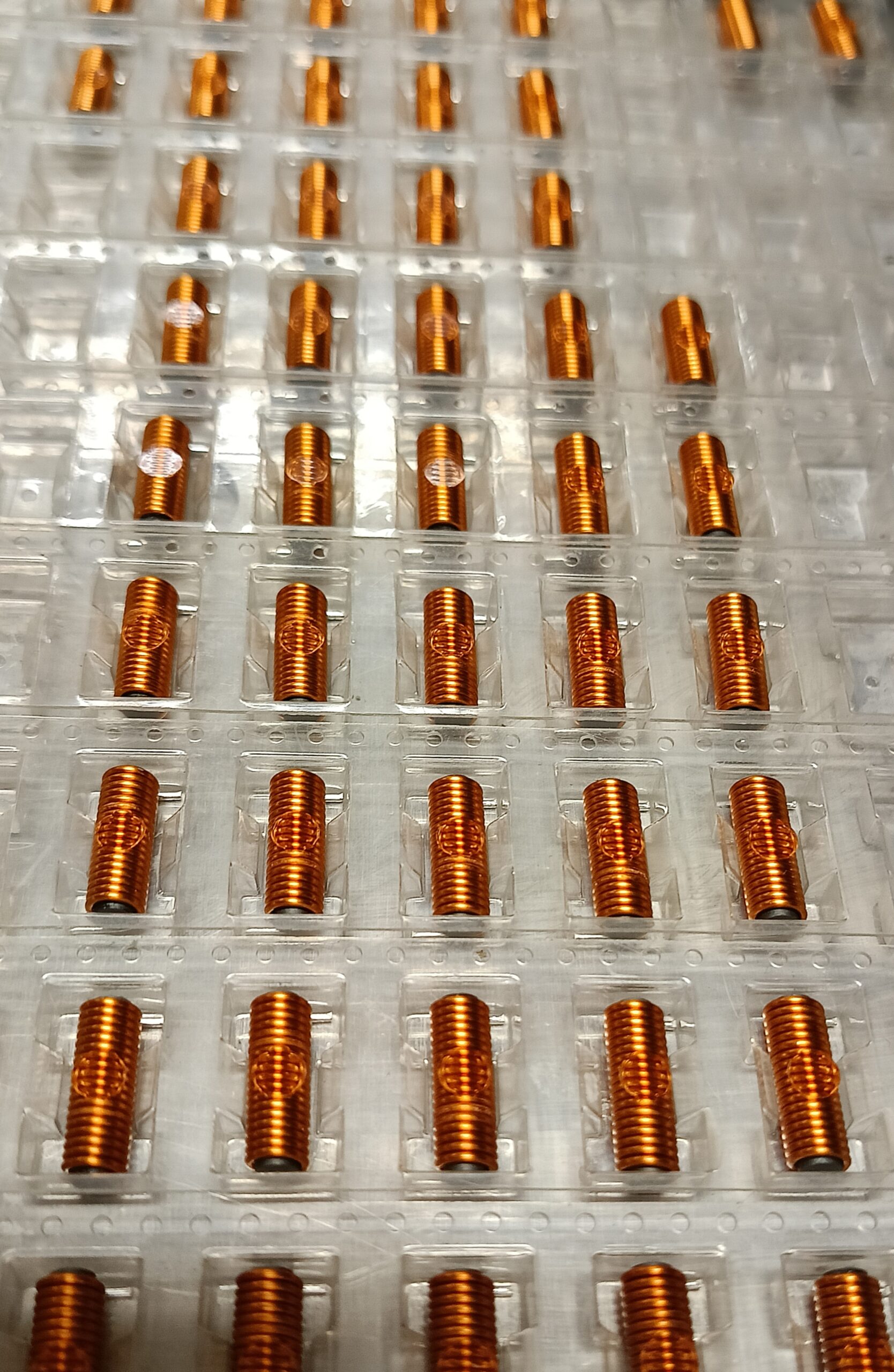
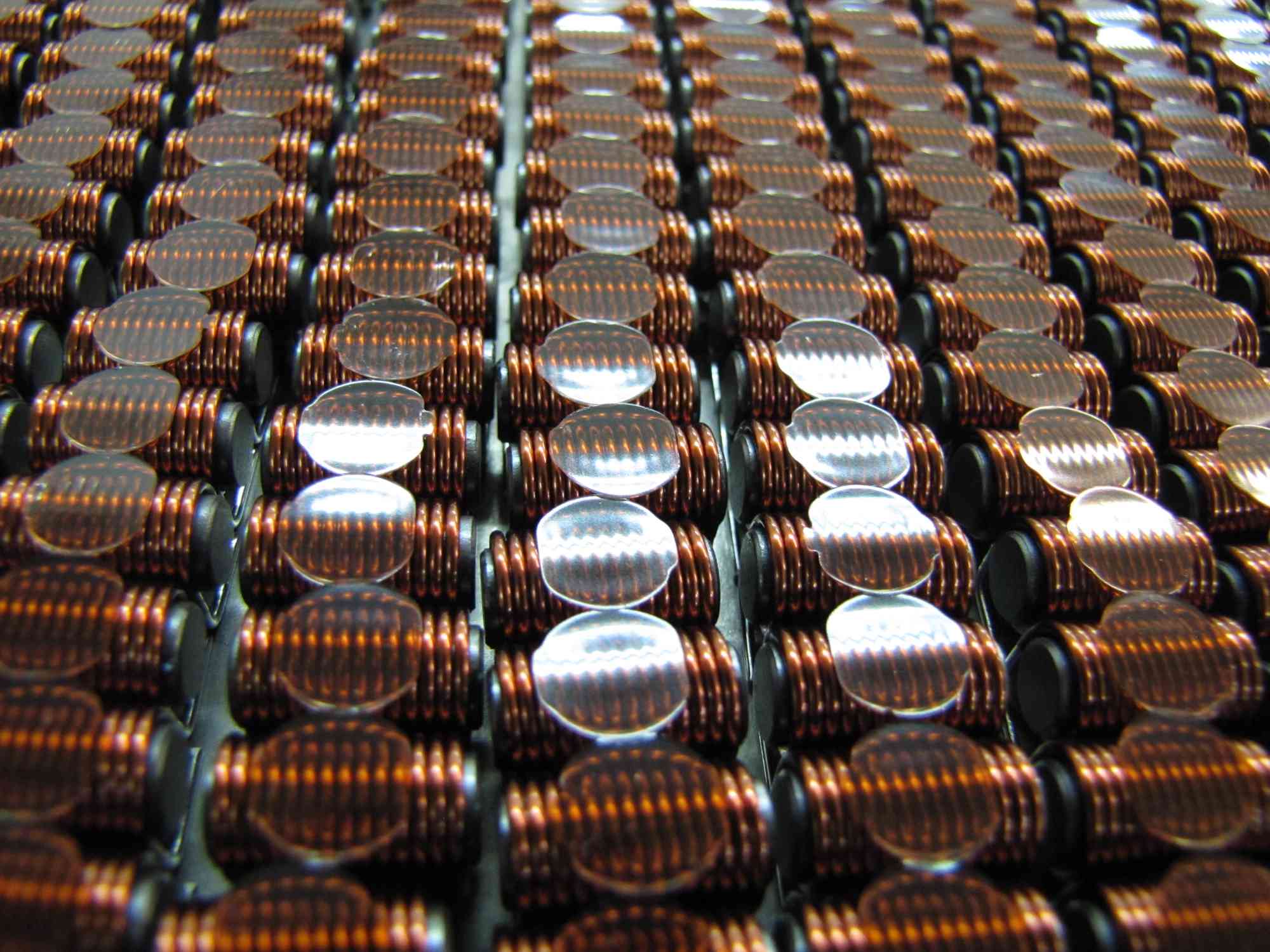
3️⃣ The shaping of the choke leads is carried out in accordance with the project requirements – radial (perpendicular to the core), axial (parallel to the core) or in another special way. We can place a glue point for automatic assembly by Pick&Place machines (these points are visible in the adjacent photo).
After this stage, straight from the production machine, we receive a “spring” coil, which is very sensitive to mechanical damage.
Alternatively, the winding process can take place immediately on the target core. However, this usually requires the preparation of dedicated equipment (due to the design of the product) and the use of appropriate wires. In return, we receive a practically finished product at this stage.
4️⃣ During winding, the products undergo rigorous quality tests – we check not only the geometric parameters, but also the achievement of the product precision in accordance with the project requirements – for example, the quality of tinning the leads. We have our own extensive measurement capabilities for electrical and geometric parameters.
5️⃣ If the choke was wound on a fixed mandrel, it is now glued to the target core of the “spring” coil. Typically, the core is glued with a thermosetting, two-component or light-curing (UV) glue.
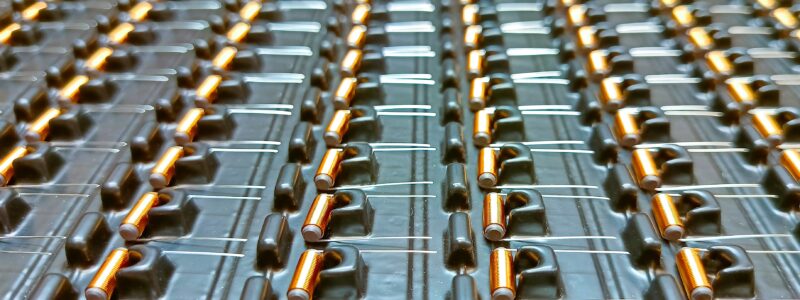
6️⃣ Measurement and packaging – This is the last stage of production, consisting in ensuring the precision of parameters and safety of products in transport. A typical method is to place the chokes in Tape&Reel packaging for automatic assembly or in pallet packaging for manual assembly (cartons and/or pallets).