

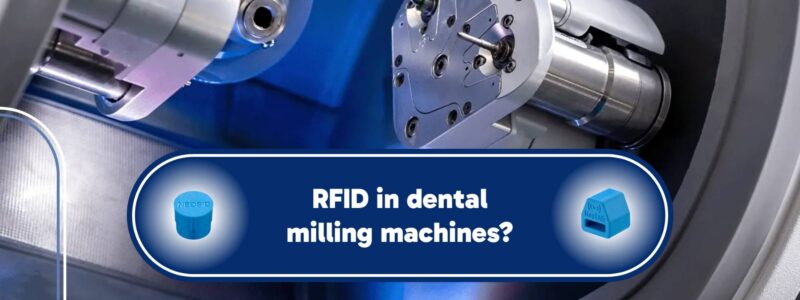
Tool automation in a digital milling center with an RFID system - NeoTAG
Modern dental laboratories and CAD/CAM facilities are transforming production processes with advanced digital technologies and automation. CNC milling machines now enable the production of crowns, bridges, inlays, and implant abutments from materials such as zirconium, ceramics, and metals in minutes instead of a week—a time previously standard in traditional production. Automating tool and material selection within the machine is crucial, as an average milling center uses dozens to as many as a hundred different tools, and any identification error can result in costly downtime or damage to the component.
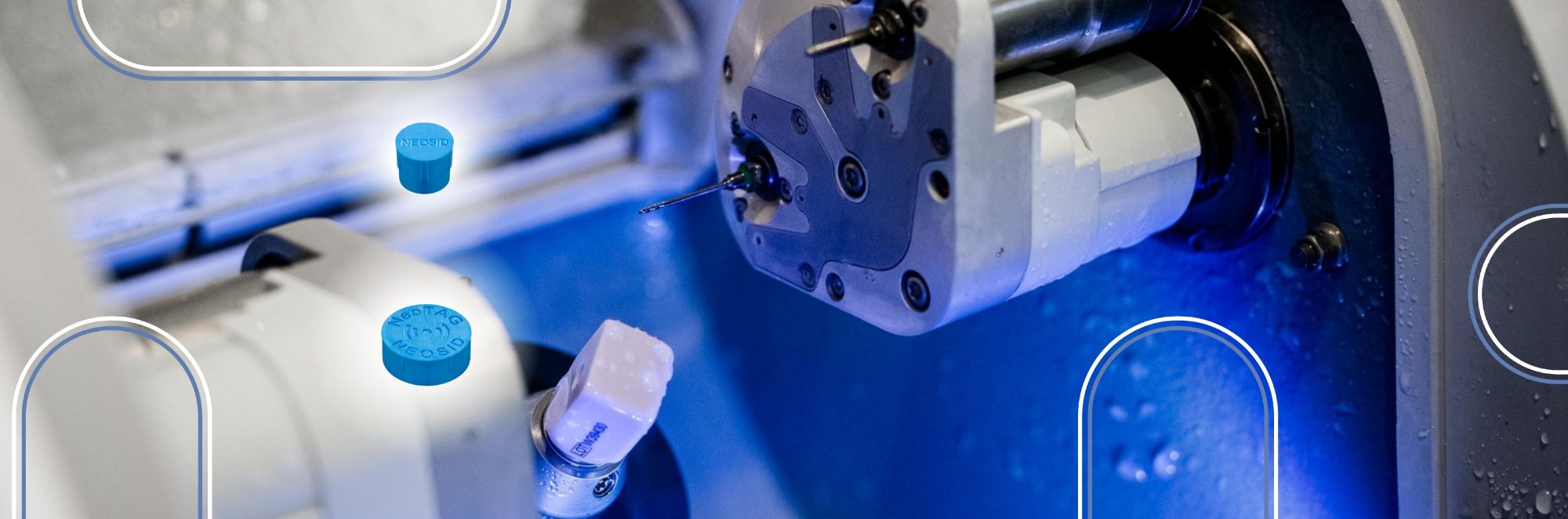
The solution to this challenge is the use of NeoTAG® miniature RFID transponders from Neosid, which integrate directly with tools and machining process components. This allows the system to automatically and contactlessly identify each tool and material in the operation sequence, ensuring full process documentation, tool wear monitoring, error elimination, and optimized resource management. RFID is now one of the foundations of Industry 4.0 solutions, enabling the automation of milling machine workflows and increasing production efficiency.
🧩 Key benefits of implementing the RFID system - NeoTAG:
☑️ Automatic tool and material identification: Eliminate human and manual errors
☑️ Tool wear monitoring and traceability: Process data contributes to quality
☑️ CNC machine optimization: Shorter setup times, less downtime, and simplified planning
☑️ Support for Industry 4.0 strategies: Data integration in the production system
Conclusions? 📈
The use of NeoTAG RFID transponders in CAD/CAM machines enables full automation of the tooling process – from identification, through operating parameters, to process documentation. This solution accelerates the production of precision prosthetic components, increases its reliability, and facilitates the implementation of future standards in dental products.
